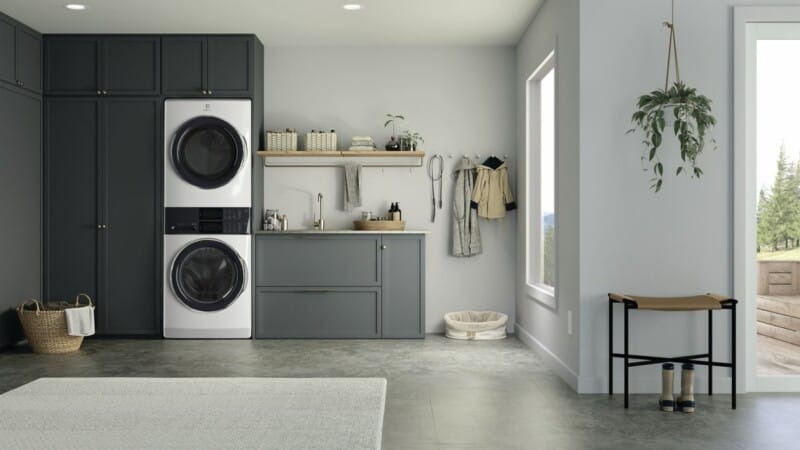
In today’s world, where space is often at a premium, the rise in popularity of stacking washers and dryers offers much to ponder. These vertical laundry units present a thoughtful solution for homeowners navigating limited space, providing an efficient means to manage laundry while conserving valuable floor area. However, as with any appliance choice, these units come with their own set of benefits and challenges. Whether you’re revamping a small apartment or seeking to optimize your laundry room’s layout, it’s essential to weigh the pros and cons of stackable laundry systems carefully.
A stacking washer and dryer—often referred to as a stackable unit—consists of two separate appliances arranged vertically: typically a front-load washer on the bottom with a dryer stacked above it. This configuration maximizes floor space in your home. There are primarily two types: separate stacking units that can be used side-by-side if needed and all-in-one systems that integrate both functions into one compact appliance.
The advantages of these units are manifold. Their space-saving design is perhaps their most significant benefit; by utilizing vertical rather than horizontal space, they free up room for other uses or storage solutions in your home. Many models also boast energy efficiency features that can lead to lower utility bills over time—a boon for both your wallet and the environment.
Moreover, stackable washers often offer ergonomic benefits due to their front-load design, reducing strain during use—a consideration particularly relevant for those with mobility issues or back problems. Modern models frequently include advanced features such as smart connectivity and steam functions that enhance convenience.
However, it’s important not only to appreciate these advantages but also consider potential drawbacks before deciding if this setup suits your needs best. The initial cost may be higher compared to traditional models due to specialized designs and features; additionally, their smaller drum sizes might require more frequent loads—an aspect worth considering depending on household size or washing habits.
Maintenance demands attention too; front-load washers are prone toward mold buildup around door seals necessitating regular cleaning routines which some might find cumbersome over time while accessibility could pose challenges especially when reaching controls atop stacked dryers without assistance from step stools etc., thus making careful evaluation crucial based upon user requirements alone!
Finally yet importantly comes compatibility concerns regarding replacements since finding matching components isn’t always straightforward thereby potentially increasing costs should simultaneous replacements become necessary down line alongside possible vibration/noise issues arising from improper installation procedures unless mitigated via anti-vibration pads etc., hence thorough research remains vital prior purchase decisions being made accordingly!
Ultimately though whether opting towards stackables versus traditional setups depends largely upon individual circumstances including available spaces/preferences/lifestyles alike ensuring whichever choice ultimately made balances efficiency/functionality alongside personal requirements thereby maximizing satisfaction derived overall throughout years ahead!